
|
Fuel System Probably at least a couple of times a month you have to deal with filling up your vehicle’s gas tank at a gas station. Most automobiles in production today depend on either gasoline or diesel. Many problems arise from using gasoline and diesel. Once they are burned, they are gone forever. That is the reality of today’s fossil fuel driven society. Many simple things can be done to improve fuel mileage and efficiency of today’s vehicles. This section discusses fuel properties, automotive fuel components, and ways to increase fuel efficiency.
Tech Tip
A Look to the Future
Due to the limited supplies of fossil fuels, oil companies and automobile manufacturers are looking for alternative fuels to propel vehicles. One type of fuel that is currently being used in specially designed vehicles is E-85. E-85 fuel is 85% ethanol (grain) based. Another promising fuel is hydrogen. Hydrogen fuel cells are devices that convert hydrogen and oxygen to water. During this process electricity is produced to propel the vehicle. With only water as a by-product, hydrogen fuel cell vehicles produce no harmful emissions.
Gasoline Properties
Gasoline and diesel, like various other products (e.g., cosmetics, paints, soaps, nylon, and asphalt), come from crude oil. Crude oil is a nonrenewable energy resource. Crude oil, a fossil fuel, is an energy resource that will not be replenished over time. Examples of nonrenewable energy resources are coal, oil, and natural gas. Under current production and consumption rates, experts project oil to last 50-100 years. Crude oil goes through a distillation process at a refinery to form gasoline. Gasoline is a mixture of hydrocarbons (hydrogen and carbon) and is primarily used for internal combustion engines. Gasoline is the fuel that propels most of today’s automobiles. Gasoline engines are considered spark ignition engines. The fuel needs to be ignited to burn in the engine. Gasoline properties that will be discussed are:
- Octane
- Knocking
- Additives
Octane
When pulling up to a gas pump, you usually have a couple of choices. Pumps are commonly labeled regular, mid-grade, or premium. What does this mean? For the most part, it relates to the octane rating in the gasoline. Octane is defined as a resistance to burning. The higher the octane number, the more the fuel resists burning. The more the fuel resists burning, the more complete the combustion is when the fuel ignites. Usually higher compression engines need higher octane fuels. Common octane numbers are regular 87, mid-grade (or plus) 89, and premium 93. The octane requirement depends on the engine design, the altitude the vehicle is driven at, and the way the individual drives. Most automobiles require a minimum of 87 octane, but always check the owner’s manual.
Trouble Guide
Engine Lacks Power (sluggish)
- Clogged fuel filter
- Impurities in fuel
- Fuel octane too low
Knocking
Many people have experienced an engine knocking or pinging during acceleration. This sound is created when fuel ignites prematurely. Anti-knock characteristics relate directly to octane ratings. The higher the octane rating the more the fuel resists knocking. It takes a higher temperature and more compression to ignite a fuel with a higher octane.
Additives
In many parts of the country deicers, such as isopropyl alcohol, are added to gasoline to prevent gas lines from freezing. Rust inhibitors are added to help volatile metals resist rusting. Detergents are added to clean the fuel system. Many cities have mandated the use of ethanol as an additive. Often up to 10% of gasoline is ethanol. Ethanol is a grain alcohol, commonly made from corn or other starch rich grains. When gasoline and ethanol are mixed, it is called gasohol. Gasohol burns cleaner, emitting less air pollutants and greenhouse gases, than 100% gasoline.
Diesel Properties Some people think diesel fuel is only used in semi-tractors or heavy equipment. However, there are many diesel cars and light trucks on the highway today. Diesel fuel is also a product of distilling (separating and vaporizing) crude oil. At different temperatures of the distillation process, different products are collected. Diesel fuel actually has more energy per volume than gasoline. Diesel engines are called compression ignition engines. They do not need spark plugs to ignite fuel. The high compression (about 20:1 compared to about 9:1 in gasoline engines) and heat in the combustion chamber ignites the fuel. Diesel engines have glow plugs that heat the combustion chamber just prior to starting. Diesel properties that will be discussed are cetane number and grades of diesel.
Cetane Number
The cetane number is much like the octane number in gasoline. The cetane number relates to how well fuel ignites. The higher the cetane number, the better the ignition quality of fuel. Cetane numbers of 40 to 50 are the most common.
Grade of Diesel
Two types of diesel fuels are used in cars and trucks: Number 1 and Number 2. The American Society for Testing Materials (ASTM) classifies these two grades. In the distillation process, No. 1 diesel fuel has a lower boiling point than No. 2 and thus vaporizes easier than No. 2. Therefore, No. 1 diesel fuel is commonly used when the outside ambient temperature is abnormally low. In the northern climates of the United States many gas stations commonly provide No. 1 in the winter, a mixture of No. 1 and No. 2 in the fall and spring, and No. 2 in the summer. No. 2 diesel fuel has a tendency to “gel” in severely cold climates.
Purpose of the Fuel System
Fuel is added to the gas tank from a gas station. The fuel (chemical energy) is stored in the gas tank for future use. The fuel is then pumped to the carburetor or injection system. The carburetor or the injection system mixes the fuel with air. The best air to fuel mixture is about 14.7 parts of air to 1 part of fuel. The mixture is brought into the combustion chamber and burned. The purpose of the fuel system is to store, transfer, and then to mix the fuel with air.
Parts of the Fuel System
The fuel system parts that will be discussed are:
- Fuel (Gas) Cap
- Fuel Tank
- Fuel Pump
- Fuel Lines
- Carburetor or Injection System
- Air Filter
- PCV Valve
- Fuel Filter
- CCV Filter
Fuel Cap
The fuel (gas) cap keeps the fuel from spilling out, releases the vacuum that is created as fuel is drawn into the engine, releases pressure as the gasoline expands and contracts with changing temperatures, and keeps foreign objects from entering the fuel tank.
Fuel Tank
The fuel (gas) tank, made of either steel or plastic, stores the fuel for later use.
Fuel Pump
The fuel pump, either mechanical or electrical, supplies the engine with fuel. Mechanical fuel pumps are usually located on the engine and are commonly used with carburetor type vehicles. Electrical fuel pumps are usually located in the fuel tank and are commonly used with fuel injected vehicles.
Fuel Lines
Fuel lines, made of either steel or rubber, carry the fuel to the carburetor or fuel injectors.
Carburetor or Injection System
Cars have either a carburetor or fuel injection system to mix the fuel with air. Most vehicles today have fuel injectors. Fuel injectors can be two types: throttle body or port. In a throttle body injection system, usually one fuel injector is used to supply fuel to all of the engine’s cylinders. In a port injection system, there is one fuel injector for each cylinder.
Air Filter
Air filters clean dirt and dust from the air that is being drawn into the engine. Thousands of gallons of air are drawn into the engine per gallon of gasoline burned. A dirty air filter can cause low fuel efficiency by “choking out” (decreasing the air-fuel ratio) the engine. Dirty air can also cause premature failure to vital engine components (e.g., bearings, valves, and piston rings).
PCV Valve
The positive crankcase ventilation (PCV) valve reduces air pollution, increases fuel economy, and recirculates excess gas. The PCV valve reduces the air pressure within the engine. A plugged valve reduces fuel efficiency and increases your vehicle’s emissions.
Fuel Filter
The fuel filter, located between the fuel tank and the carburetor or injection system, cleans the fuel entering the engine. The fuel filter may be located under the vehicle near a frame member or under the hood near the carburetor or fuel injectors. Fuel filters have a paper type element in them to collect dirt. Clogged fuel filters slow fuel delivery, lower the performance of the engine, and cause excessive wear on the fuel pump.
Tech Tip
Changing the Fuel Filter
When changing the fuel filter on your vehicle, it is important to avoid getting fuel on your skin or in your eyes. All fuel system services should be done in a well-ventilated area with the engine cool. It is also important to relieve fuel pressure. Some vehicles with fuel injection systems run as high as 85 PSI (pounds per square inch) of fuel pressure. Always where safety goggles.
CCV Filter
The crankcase ventilation filter is usually placed inside the air filter housing and is connected to the PCV valve via a tube or hose. (CCV filter is sometimes called the PCV inlet filter.) This filter cleans the air going into the engine’s crankcase.
Improving Fuel Economy Several things contribute to good fuel economy. Over time, new technology has contributed to better fuel and fuel delivery methods. The do-it-yourselfer can improve fuel economy by:
- Checking tire pressure
- Tuning-up the engine
- Checking the wheel alignment
- Running air conditioning only when necessary
- Changing the oil as required
- Checking cooling system operation
- Looking for dragging brakes
- Avoiding excessive idling
- Combining trips
- Moderating speed
Trouble Guide
Excessive Fuel Consumption
- Dirty air filter
- Low tire pressure
Tire Pressure
Probably the most overlooked and the easiest thing to check regularly is tire pressure. Low tire pressure causes more frictional resistance on the highway. This reduces fuel economy and increases tire wear. Having incorrect tire pressure can also increase the chances of having a dangerous blowout.
Tune-ups
A properly tuned engine (replacing ignition components such as spark plugs and replacing fuel related components such as the air filter) can improve your fuel mileage. An improperly running engine can waste up to 15% of additional gasoline.
Wheel Alignment
If the wheels are not contacting the road surface properly, fuel mileage will decrease due to increased friction.
Air Conditioning
Running extra accessories puts more load on the engine, requiring more fuel.
Oil Changes
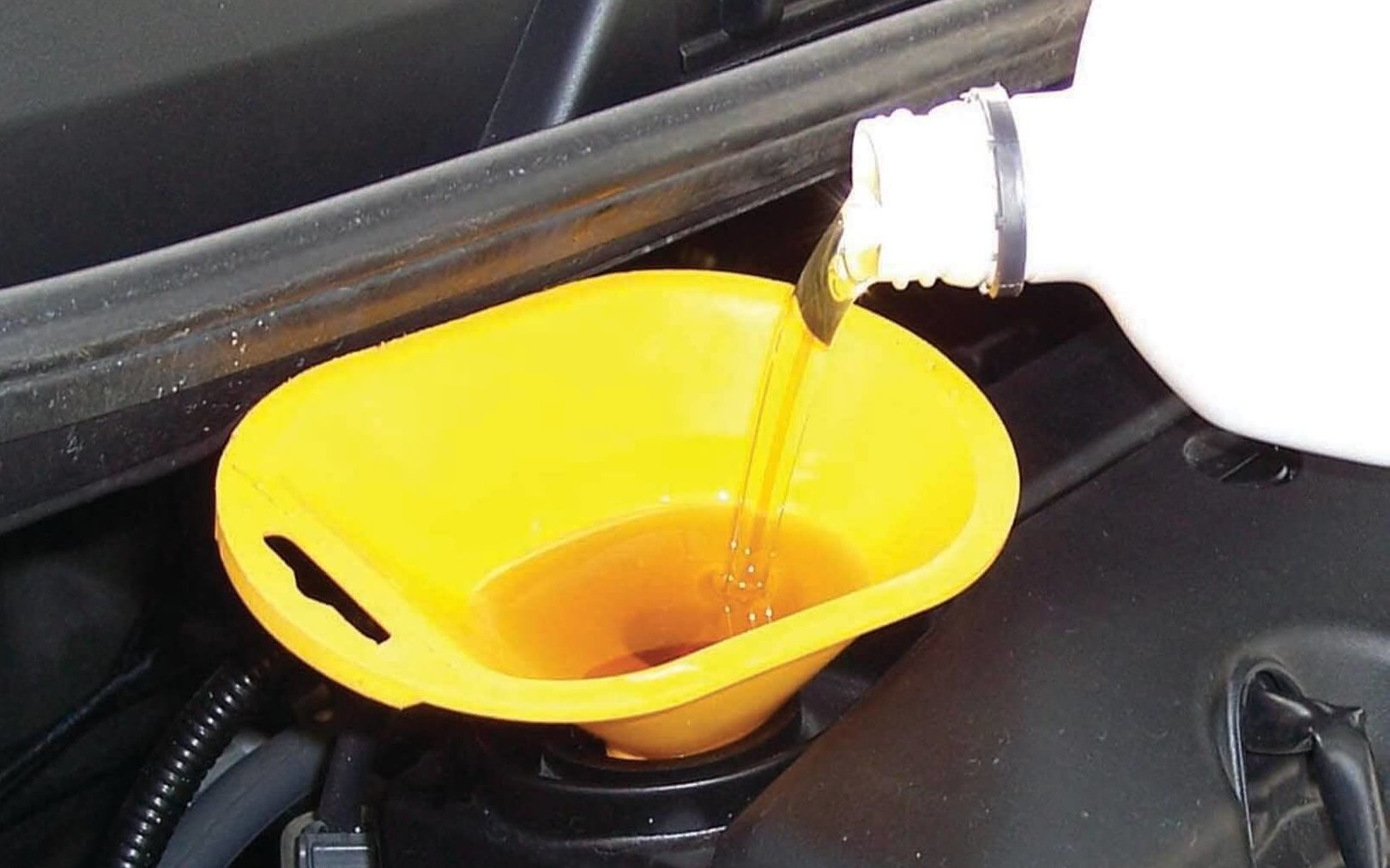
Changing the oil as required by the manufacturer increases fuel economy. Clean engine oil has better cooling, cleaning, lubricating, and sealing properties than dirty oil.
Cooling System
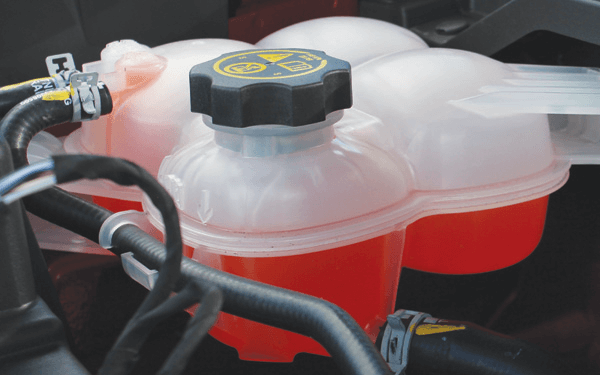
If the engine is running too cool, it can lower fuel economy. The proper thermostat and periodical flushing will assure proper operation.
Brakes
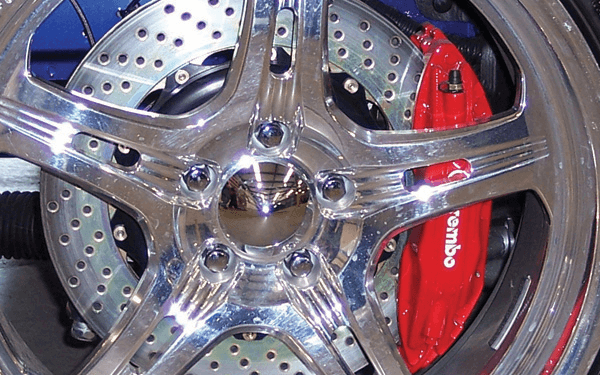
If the brakes are dragging or rubbing slightly, they can cause more frictional resistance for the engine to overcome, reducing fuel economy.
Avoid Excessive Idling
If your vehicle is not moving, you are getting zero miles to the gallon. It is much better for the environment and for your pocketbook to shut off your car if you plan to sit for an extended period of time.
Tech Tip
Excessive Idling
Often vehicles are left to idle. Short idling, such as sitting at a stoplight, is not a problem. But an engine left idling for an hour can burn three gallons of gas, adding unnecessary pollution to our atmosphere. A well-tuned vehicle does not require a lot of fuel to start. It is much more efficient to turn off your engine instead of letting it idle for long periods of time.
Combine Trips
One of the best ways to increase fuel economy and the life of your engine is to plan ahead. Short trips are hard on engines. On short trips engines do not have time to reach the most optimal operating temperature, causing poor fuel economy. Combining short errands will also put fewer miles on your vehicle.
Moderate Speed
Most vehicles receive the best fuel economy at 55 miles per hour. Also it is important to avoid abrupt accelerations and decelerations. “Stop and go” traffic reduces fuel economy dramatically. Using your cruise control to keep your speed constant on the highway will also increase your fuel economy.
Fuel Prices Fuel prices first became a concern in the 1970s, but have gained attention once again. Even though technology is advancing fuel efficiency, much of the public has decided to buy gas guzzling vehicles (e.g., sport utility vehicles). Every year more and more vehicles are put on the highways consuming more and more fuel. If the supply of fuel decreases and fuel demand increases, prices will surely rise. Contrary to belief, fuel is only marked up about 5% at retail outlets. The local service station/convenience store makes about 8-10 cents on every gallon of gas sold.
Summary
When pulling up to a gas pump, it is important to supply your engine with the fuel that the automotive manufacturer recommends. The purpose of the fuel system is to store, transfer, and then mix the fuel with air. In a gasoline engine, the lower the octane number the more likely the engine will knock. Gasoline engines are spark ignition engines. Diesel engines are compression ignition engines. Diesel fuel comes in two grades: No. 1 and No. 2. The outside temperature determines the type of diesel to use No. 2 in warm weather and No. 1 in cold weather. Various parts of the fuel system work together to supply clean fuel and air to the engine. Fuel economy can increase through tune-ups, correct tire pressure, regular oil changes, and moderating your speed.
Top of Page

|