

Auto Upkeep (5th Edition © 2025) – Homeschool Curriculum Kit

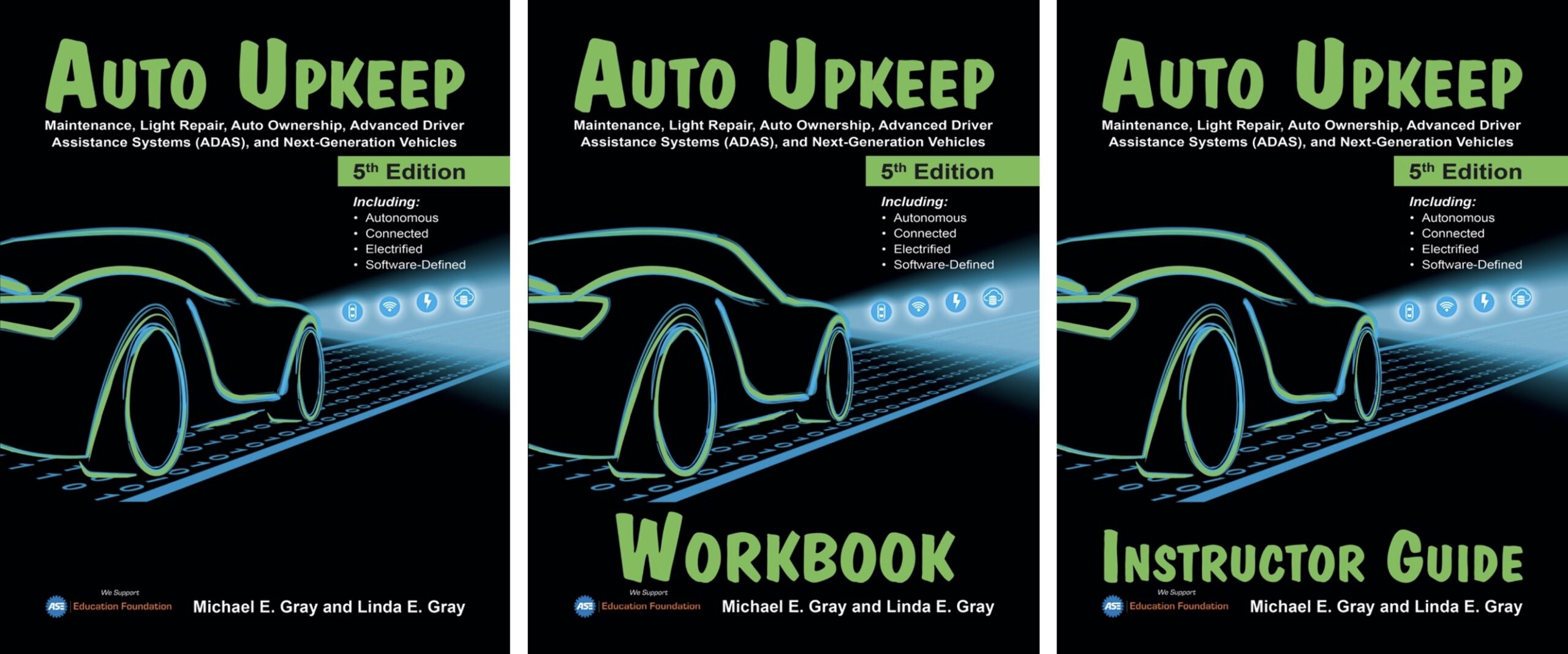
The Auto Upkeep Homeschool Curriculum Kit has the resources you need to homeschool your high school student on basic car care, maintenance, light repair, auto ownership, and how cars work. The Kit includes the Auto Upkeep Textbook, Workbook, and Instructor Guide.

Original price was: $300.00.Current price is: $180.00.

SKU ISBN 978-1-62702-058-9 Category Tag

Share

Have your teens been asking for a fun and practical homeschooling elective? The Auto Upkeep Homeschool Curriculum Kit has the resources you need to homeschool your high school student on basic car care, maintenance, light repair, auto ownership, and how cars work. The Auto Upkeep Homeschool Curriculum Kit includes the Textbook, Workbook, and Instructor Guide. Auto Upkeep is an introductory automotive course that focuses on what all car owners and entry level technicians should know and be able to do, including the fundamental knowledge and experience in owning and maintaining an automobile. Students will discover how to choose a quality repair facility, buy a car, choose an insurance policy, handle roadside emergencies, diagnose common problems, and communicate effectively with technicians. Students will learn about safety, tools, automotive systems, and how to complete basic maintenance and repairs. For individuals that want to pursue Automotive Technology as a career, Auto Upkeep provides a solid foundation critical to maintenance, light repair, auto ownership, and how cars work.

Textbook (Hardcover – 400 Pages):

From choosing an insurance policy to performing basic maintenance and repair, Auto Upkeep is the do-it-yourself automotive guide for the driver in you. Auto Upkeep helps keep you safe and your vehicle reliable by providing easy-to-follow information with detailed pictures and drawings. Discover how to choose a quality repair facility, buy a car (including an electric vehicle), handle roadside emergencies, diagnose common problems, and communicate effectively with technicians. Learn how advanced driver assistance systems (ADAS) and next-generation vehicles are shifting the automotive paradigm.

Workbook (Paperback – 224 Pages):

The Auto Upkeep Workbook accompanies the Textbook, explaining additional step-by-step procedures that can easily be performed with basic tools. It will help you become confident in accomplishing simple, but important, preventative measures on your vehicle – all while saving money. Additional activities will help you identify your vehicle’s advanced driver assistance systems (ADAS) and understand how vehicle automation impacts driver responsibility.

Instructor Guide (Paperback – 640 Pages):

The Auto Upkeep Instructor Guide is a comprehensive resource that assists in delivering the curriculum. It includes a sample course syllabus, standards correlations, lesson plans, readability worksheets, student self-assessment forms, tests, answer keys, and additional resources to help facilitate instruction.

Credits/Units:

Auto Upkeep is usually a 1 credit course elective in a high school. If you would like to run this as a 1/2 credit course, shorten the number of hours by reducing or eliminating the number of activities completed. Activities are both hands-on and Internet-based. Most hands-on activities can be completed with a limited number of tools. Some activities can also be completed more than once to extend hours of instruction, enhancing the student’s skill set. The curriculum is flexible for you to adjust it to fit your needs.

Hands-on and Internet-Based Activities:

Chapter 1 – Introduction and How Cars Work

  • Workplace Skills Activity – Identify important workplace skills and understand why they are integral to professionalism.
  • Car Identification and Preparing for Vehicle Service Activity – Identify an automobile by manufacturer, model year, make, model, and trim level. You will also prepare a vehicle for service and return to the customer.
  • Owner’s Manual Activity – Locate and use an online owner’s manual.

Chapter 2 – Buying an Automobile

  • Towing and Hauling Activity – Identify a vehicle’s towing and hauling capabilities.
  • Advanced Driver Assistance Systems (ADAS) Activity – Locate ADAS on vehicles, understanding their features, differences, and operational limitations.
  • Buying a New Automobile Activity – Differentiate between MSRP, dealer invoice, and dealer cost.
  • Buying a Used Automobile Activity – Research prices, reliability ratings, recalls, technical service bulletins, and safety ratings on used automobiles.

Chapter 3 – Automotive Expenses

  • Automotive Expenses Activity – Calculate automotive expenses.

Chapter 4 – Repair Facilities

  • Repair Facilities Activity – Identify vehicle information, choose a quality repair facility, and interpret a work order/repair invoice.

Chapter 5 – Safety Around the Automobile

  • Automotive Safety Activity – Identify the location of emergency and safety equipment.
  • Safety Data Sheet (SDS) Activity – Locate and interpret a safety data sheet (SDS).
  • Personal Protection Equipment (PPE) and Fire Safety Activity – Identify the importance of using personal protection equipment (PPE) and research fire safety.

Chapter 6 – Tools, Fasteners, and Equipment

  • Tools and Equipment Activity – Identify basic tools that are used in automotive shops.
  • Fasteners Activity – Identify and measure fasteners. You will also be able to remove a broken bolt, restore internal and external threads, and repair threads.
  • Service Manual Activity – Navigate an online service manual.

Chapter 7 – Auto Care and Cleaning

  • Interior Cleaning Activity – Clean the inside of a vehicle.
  • Exterior Cleaning Activity – Clean the outside of a vehicle.
  • Waxing Activity – Wax the finish on a vehicle.

Chapter 8 – Fluid Level Check

  • Fluid Level Check Activity – Check the fluid level in various vehicle components.

Chapter 9 – Electrical System

  • Ohm’s Law Activity – Calculate volts, amps, and ohms using Ohm’s Law, Series Rules, and Parallel Rules. You will also be able to analyze series, parallel, and series-parallel circuits.
  • Circuit Construction Simulator Activity – Use an online circuit simulator to test circuits.
  • Simple Circuits Activity – Build and test a simple circuit.
  • Voltage Drop Activity – Understand various voltage drop tests.
  • Wiring Diagram Activity – Locate and interpret a wiring diagram.
  • Battery Activity – Clean and test an SLI battery, measure battery drain, and research proper methods to recharge batteries.
  • Charging Activity – Test the AC generator (alternator) and replace a drive belt.
  • Starting Activity – Test a starter.

Chapter 10 – Lubrication System

  • Oil and Filter Change Activity – Change the oil and filter on a vehicle.

Chapter 11 – Fuel System

  • Fuel System Part Identification Activity – Use an online auto parts catalog to identify fuel system parts.
  • Fuel System Maintenance Activity – Identify the components of the fuel system and change the air filter, CCV filter, PCV valve, and fuel filter on a vehicle.

Chapter 12 – Cooling System and Climate Control

  • Air Conditioning Activity – Inspect and identify components within the air conditioning (A/C) system.
  • Cabin Air Filter Activity – Replace the cabin air filter on a vehicle.
  • Cooling System Activity – Test, inspect, and service the cooling system and observe thermostat operation.

Chapter 13 – Ignition System

  • Ignition System Activity – Inspect and install spark plugs, spark plug wires, coil-on-plug (COP) boots, and a distributor cap and rotor.

Chapter 14 – Suspension, Steering, and Tires

  • Suspension and Steering Activity – Inspect and perform basic service procedures on suspension and steering components.
  • Tire Inspection and Rotation Activity – Check the air pressure, inspect tires for wear, and rotate tires.
  • Choosing the Right Tires Activity – Research and choose the right tires for your vehicle, beyond just the correct size.

Chapter 15 – Braking System

  • Brake Inspection Activity – Identify brake components and inspect disc brakes.

Chapter 16 – Drivetrain

  • Drivetrain Activity – Identify and inspect drivetrain components.

Chapter 17 – Exhaust and Emission System

  • Exhaust and Emission Activity – Identify and inspect exhaust and emission components.

Chapter 18 – Alternative Fuels and Designs

  • Payback Period Activity – Calculate payback period on an alternative fueled vehicle.
  • Future Vehicle Activity – Predict the role of the automobile in 2050.

Chapter 19 – Automotive Accessories

  • Automotive Accessories Activity – Estimate the cost of accessories for a vehicle.

Chapter 20 – Common Problems and Roadside Emergencies

  • Changing a Flat Tire Activity – Change a spare tire.
  • Jump-Starting Activity – Jump-start a vehicle.
  • Lighting Activity – Replace various lights on a vehicle.
  • Replacing Wipers Activity – Replace wiper blades on a vehicle.
  • On-Board Diagnostics Activity – Retrieve diagnostic trouble codes (DTCs) from an OBD II system using a basic scan tool.

Chapter 21 – Electric Vehicles

  • Electric Vehicles Activity – Identify and compare current electric vehicles for sale.

Chapter 22 – Next-Generation Vehicles

  • ADAS and Vehicle Automation Level Identification Activity – Identify a vehicle’s automation capability.